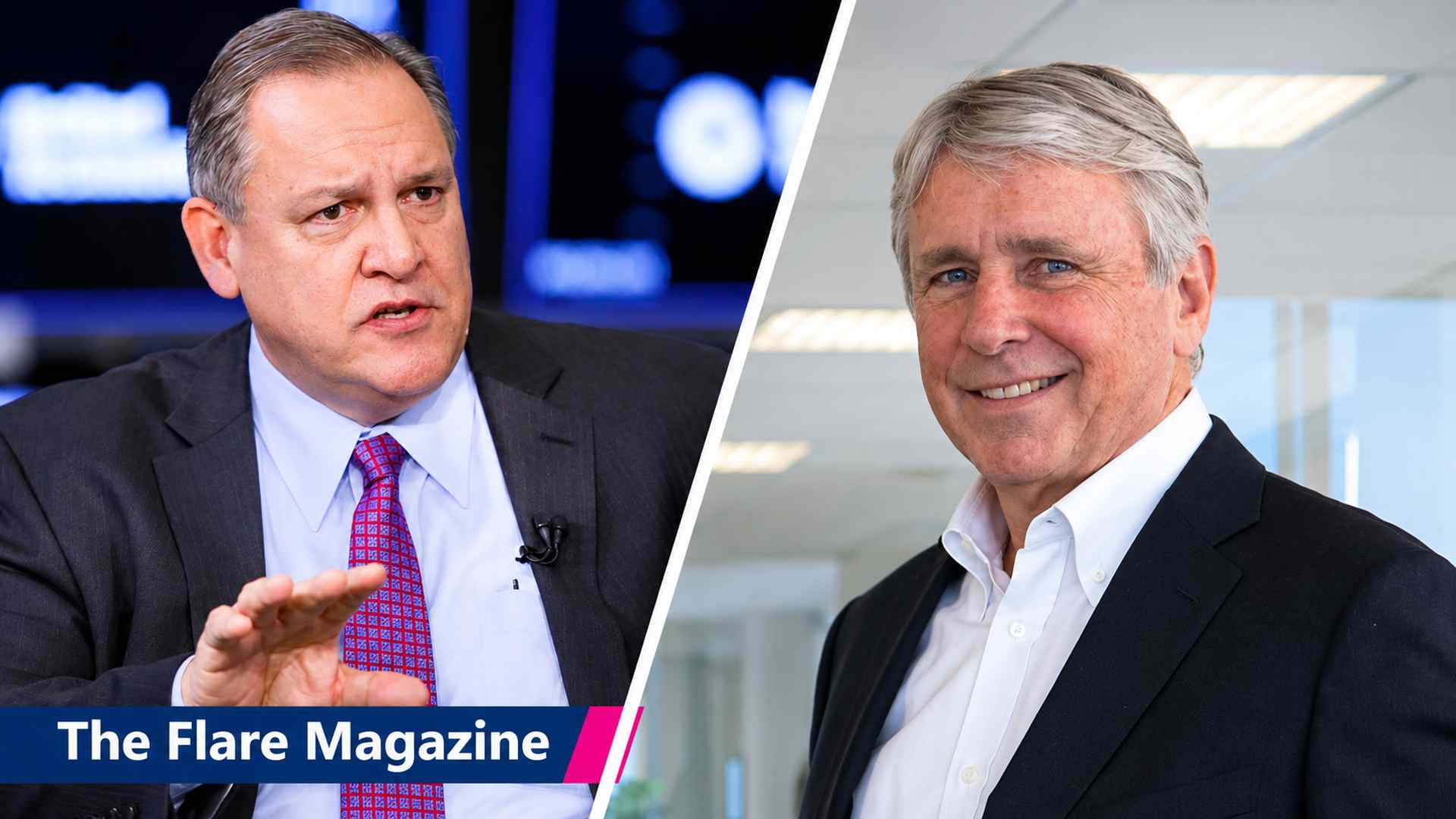
Greg Hayes and Tom Kennedy are American business executives known for leading United Technologies and Raytheon through their historic 2020 merger. Hayes was CEO of United Technologies, while Kennedy led Raytheon. Their firms joined to form Raytheon Technologies, now known as RTX Corporation.
Both men built long careers before working together. Hayes rose through finance and corporate management, while Kennedy brought experience in engineering, military service, and defense technology. Their combined leadership helped create one of the world’s largest aerospace and defense firms.
In this article, you’ll discover their backgrounds, education, career achievements, professional connection, roles in the Raytheon merger, personal lives, and what they are doing in 2026.
Who Are Greg Hayes and Tom Kennedy?
Gregory J. Hayes once led both United Technologies and RTX. He worked in finance, bought firms, and sold parts of them. He then helped guide the new firm.
Thomas A. Kennedy, often called Tom, trained as an engineer. He also served as an Air Force captain. He rose through Raytheon’s defense teams and later became its CEO and chairman.
Their names are often mentioned together because they led the two firms that agreed to merge in 2019. Their connection is professional. Each had a separate career and was in charge of a different firm before the deal.
Their names are known in business, not in film or TV. Their work helps explain how Raytheon joined a much larger firm.
Greg Hayes: Education and His Rise at United Technologies
From Purdue Graduate to Finance Leader
Hayes earned a degree in management at Purdue in 1982. He also trained as a certified public accountant. His studies helped him build a career in finance.
He joined United Technologies in 1999 when it merged with Sundstrand Corporation. He held jobs in finance and planning.
From 2008 to 2014, he was chief financial officer of United Technologies. He helped plan the firm’s spending and key deals.
He became CEO in 2014 and chairman in 2016. He then led a vast group that made aircraft parts, elevators, and cooling systems.
How He Changed the Company’s Direction
As CEO, Hayes pushed United Technologies toward a sharper focus on aerospace. In 2015, the firm sold Sikorsky Aircraft, the maker of helicopters, to Lockheed Martin.
United Technologies then bought Rockwell Collins in 2018. That deal gave the firm more aircraft systems and helped grow Collins Aerospace.
Hayes also led plans to make Carrier and Otis independent public firms. Carrier was known for heating and cooling systems, while Otis made elevators and escalators.
Both firms split off in April 2020. UTC could then join its aircraft and defense work with Raytheon, without bringing in all its old units.
Tom Kennedy: An Engineer Who Became Raytheon’s CEO
Rutgers, Military Service, and Technical Training
Kennedy grew up in Trenton, New Jersey. His parents had moved to the U.S. from Ireland, and he grew up in a working-class home. A scholarship helped him attend Rutgers.
Kennedy got his engineering degree from Rutgers in 1977. He went on to earn a master’s degree at the Air Force Institute of Technology and a PhD in engineering from UCLA.
Before joining Raytheon, he served in the U.S. Air Force and reached the rank of captain. The Air Force gave him hands-on skills he later used at work.
After the Air Force, Kennedy worked at Hughes Aircraft while he finished his PhD at UCLA.
In 1983, he joined Raytheon and began work in radar development. Radar was the start of a long career in defense tech.
Hayes rose through finance. Kennedy began as an engineer. They brought different skills to the talks about joining their firms.
Leadership Across Raytheon’s Defense Businesses
Kennedy held top jobs in Raytheon’s space, air, and unmanned systems groups. They built systems for the military and the public sector.
He became executive vice president and chief operating officer in 2013. He helped run the firm and link its teams.
Raytheon named him CEO in March 2014. He also became chairman that October, giving him a central role in decisions about its strategy and future investment.
He helped lead work in defense and cyber safety. He also backed school programs in science and math.
How Their Work Led to the 2020 Raytheon Merger
The Agreement Announced in June 2019
United Technologies and Raytheon announced their plan to combine on June 9, 2019. The firms chose an all-stock deal. This meant shareholders would get stock in the new firm, not a cash buyout.
The idea was to bring together businesses with different strengths. United Technologies had major operations in aircraft engines and aviation equipment. Raytheon was known for missile systems, radar, and other defense products.
In 2019, the firms forecast about $74 billion in yearly sales after the deal. This was a plan, not sales the new firm had earned.
The deal gave UTC owners about 57 percent of the new firm. Raytheon owners got about 43 percent. The deal still needed clearance from U.S. and other regulators.
What Changed When the Deal Closed
The merger was completed on April 3, 2020, after Carrier and Otis became separate firms. United Technologies took the name Raytheon Technologies Corporation, and its stock began trading under the ticker RTX.
Hayes became CEO of Raytheon Technologies. Kennedy took the role of executive chairman of the board. The CEO ran the firm. The executive chairman led its board.
The new group brought together Collins Aerospace and Pratt & Whitney with Raytheon’s defense operations. It served both airlines and the military, instead of one main market.
The timing was hard. COVID-19 had cut air travel and hurt the aircraft market. The leaders had to bring the firms together while also dealing with that wider crisis.
The firm’s official merger announcement explains the approvals and planned closing date.
What Happened to Their Roles After the Merger?
Kennedy’s Retirement and Later Board Work
Kennedy retired as executive chairman of Raytheon Technologies on June 1, 2021. He had spent more than 37 years with Raytheon and the new firm.
Once he left that role, Hayes added the chairman’s position to his work as CEO. That made the change in leadership clear as the new firm moved past its first year.
Kennedy later joined the board of Textron, another U.S. firm with aviation and defense businesses. He joined on January 1, 2023.
In 2026, Textron still lists him as a director. He serves on the audit and pay committees. His years in defense help with that work.
Hayes’ Transition and His Work in 2026
Christopher T. Calio succeeded Hayes as RTX president and CEO on May 2, 2024. Hayes became executive chairman and helped with the change in command.
He stepped down from the RTX board in April 2025. He advised the CEO through January 2, 2026.
Hayes still serves on boards outside RTX. Phillips 66 identifies him as its lead independent director, with work on corporate governance and other board committees.
He is also a director of medical technology firm BD, which he joined in 2025. He also chairs the National Academy Foundation, which helps students plan careers.
Family Life and Interests Beyond Corporate Leadership
A Purdue University profile from 2020 identified Hayes’ wife as Renata and named their four children: Kaitlin, Maiya, Spencer, and Zachary.
Kennedy has spoken about his wife, Elaine, in a Rutgers University alumni interview. They knew each other as children and began dating while he was at Rutgers. The couple set up a Rutgers scholarship for engineering students, with a focus on women who want to work in electrical engineering or cybersecurity.
He has long backed science and engineering students. In 2021, Rutgers recognized him with its School of Engineering Medal of Excellence.
Why Their Leadership Still Matters in Aerospace
The deal joined firms that made many kinds of products. Aircraft engines, flight systems, radar, and defense equipment could now sit within one large organization.
That difference matters because commercial aviation and government defense spending do not always move in the same way. A firm with both types of business may have more ways to invest and plan through changes in demand.
It also brought questions about scale and competition. Large firms may have more funds for research. Yet fewer rivals can mean less choice for buyers.
In July 2023, Raytheon Technologies changed its name to RTX Corporation. Today its main businesses are Collins Aerospace, Pratt & Whitney, and Raytheon. The firm name changed, but the merger remains the key link between the two former CEOs.
Frequently Asked Questions
Are Greg Hayes and Tom Kennedy related?
Their documented connection is through business. They led United Technologies and Raytheon when those firms agreed to merge, and they later held different leadership jobs at Raytheon Technologies.
Who was CEO after Raytheon and United Technologies merged?
Greg Hayes became CEO of Raytheon Technologies when the merger closed on April 3, 2020. Tom Kennedy became executive chairman of its board.
Is Raytheon Technologies the same firm as RTX?
Yes. Raytheon Technologies changed its name to RTX Corporation in July 2023. RTX remains its stock ticker.
What does Tom Kennedy do in 2026?
He serves on Textron’s board of directors. He retired from Raytheon Technologies in 2021 and joined Textron’s board in 2023.
Where is Greg Hayes working in 2026?
After his RTX advisory term ended in January 2026, Hayes continued in board roles, including at Phillips 66 and BD.
Final Thoughts
Greg Hayes and Tom Kennedy brought different skills to the same major business deal. One built his career through finance and corporate strategy. The other rose through engineering and defense systems. Their shared work helped form RTX, while their later roles show how both stayed active in U.S. business leadership after leaving the firm’s top jobs.
You may also read: Jeff Bezos and Jerry Speyer: Careers, Families, and Their New York Connection.