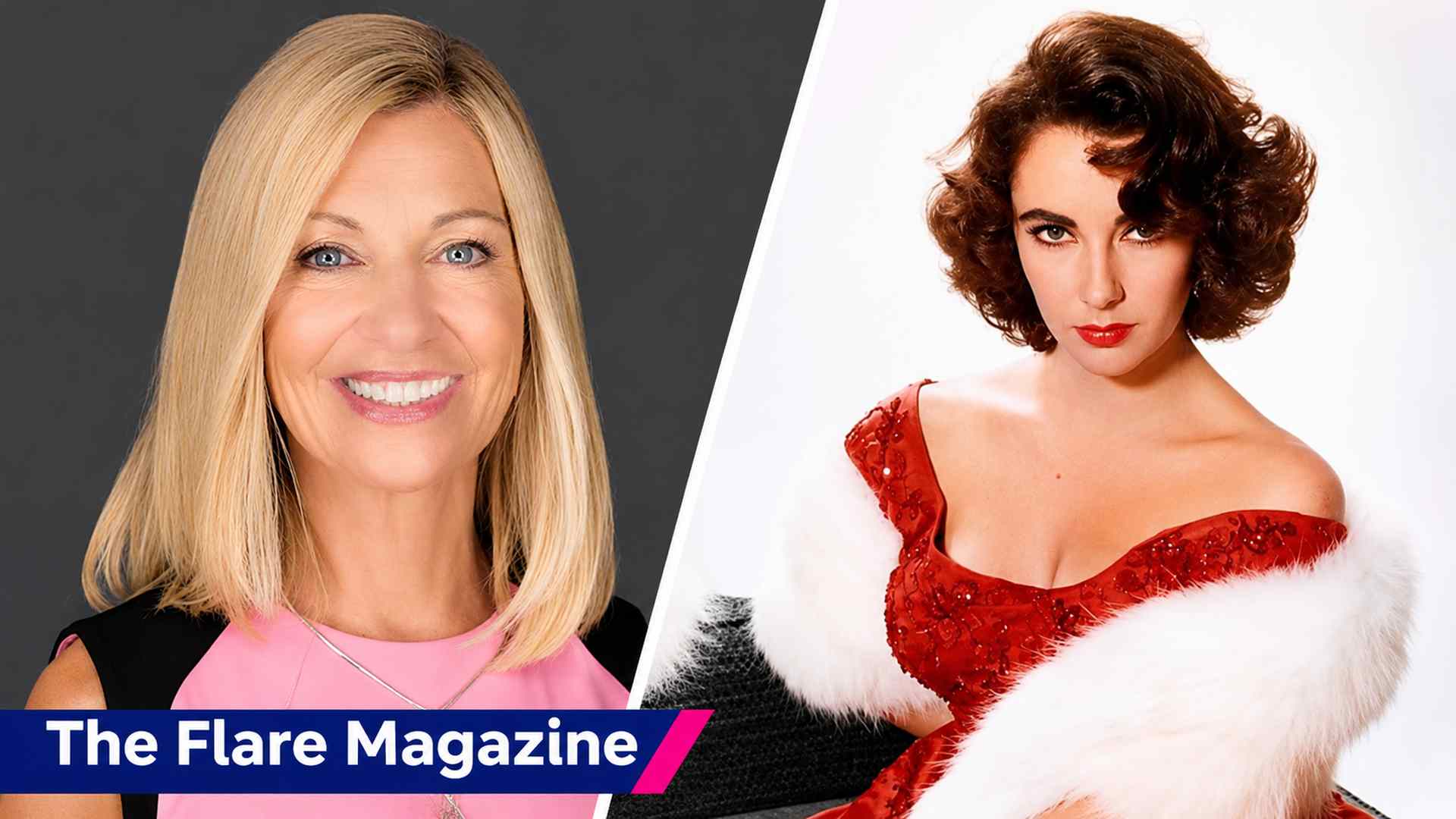
Karen Lynch and Elizabeth Taylor have no documented family, business, or charity connection. Karen S. Lynch led CVS Health, while Elizabeth Taylor was a two-time Oscar winner and an HIV/AIDS advocate. Their public careers developed through different institutions. The link suggested by a joint search for their names is not an established personal relationship.
In this article, you’ll learn who both women are, how their careers developed, and whether their lives ever crossed in a meaningful way. You’ll also discover why Lynch’s work in American healthcare differs from Taylor’s activism, and where both stories stand today.
Karen Lynch and Elizabeth Taylor: What Is the Connection?
No established family tie links the former CVS chief to the Hollywood star. Taylor had four children, none of whom was Lynch. Their professional backgrounds also show no common employer, shared foundation role, or public project. It would therefore be inaccurate to describe them as relatives or business partners.
Their lifetimes did overlap. Taylor lived until 2011, when Lynch was already active in healthcare management. So it is not possible to rule out every private meeting. What matters for the public story is that no documented friendship or joint work joins their careers.
The name Karen Lynch can also cause mix-ups because it belongs to more than one person. A novelist has the same name as the executive. This article focuses on Karen S. Lynch, the American leader of CVS Health, rather than another woman who shares the name.
The clearer comparison is about how each woman affected the world around her. One helped guide companies involved in medical care and insurance. The other used her fame to bring money, empathy, and attention to people living with HIV/AIDS. Those stories can be compared without joining them into one.
Karen S. Lynch’s Background and Career
Lynch did not start her career as a medical professional. She began in accounting and later moved into the health insurance business. That path gave her a mix of financial knowledge and business experience before she took charge of a company used by millions of Americans.
From Boston College to Aetna
Lynch earned an accounting degree from Boston College in 1984 and went on to complete an MBA at Boston University. She began her working life at Ernst & Young as a certified public accountant. The job required close attention to risk, costs, and financial reports, skills that would matter in her later roles.
She held senior positions at Cigna and Magellan Health Services before joining Aetna in 2012. In 2015, she became the president of Aetna, the first woman to serve in that role. Her rise was notable in an industry where large health plans had long been led mainly by men.
Lynch has shared how family loss shaped her view of the healthcare system. In a McKinsey interview, she described losing her mother when she was young. Later, while her aunt was ill, she found it hard to get the answers her family needed. She has connected those experiences to her wish to make care easier to navigate.
What Aetna Did and Why It Mattered
Aetna was a major health insurer. It helped people pay for care through plans offered to individuals, employers, and other groups. Insurance choices can affect which doctors people see, how they fill prescriptions, and what costs they face. Leading Aetna gave Lynch a close view of those issues.
CVS Health bought Aetna in 2018. The deal brought insurance into a business already known for pharmacies and drug benefit services. It also set the stage for Lynch’s next role. She would later lead a company trying to connect more of the steps people take to obtain medical care.
Becoming CEO of CVS Health
CVS named Lynch its next president and CEO in November 2020. She took over from Larry Merlo on February 1, 2021. Her new job brought together retail pharmacies, health insurance, and services that help manage prescription drug benefits.
The timing placed her at the center of the COVID-19 pandemic. People across the country were visiting pharmacies for vaccines, tests, medicine, and health advice. The company faced major demands as it kept stores and services running while the public health crisis changed daily life.
Her role involved more than sales at the drugstore counter. CVS served people through Aetna plans, pharmacy benefit operations, and its many community locations. Decisions made at the top could affect workers, doctors, patients, and the people whose health costs were covered by its plans.
Expansion Into More Direct Care
During Lynch’s time as CEO, CVS moved further into medical services. In 2023, it acquired Signify Health and Oak Street Health. Signify brought ways to assess and support patients in their homes. Oak Street added a network of primary care centers with a focus on older adults.
The idea was to link more of a person’s care. A health plan, a pharmacist, and a family doctor often work in separate settings. CVS wanted to bring more of those services within one group. That was a big change for a company many Americans had known chiefly as a pharmacy chain.
The deals also carried risk. Buying large businesses costs money, and bringing them together takes time. The model had to work while medical costs continued to rise. Those pressures became more visible as CVS revised its financial outlook in 2024.
Why Lynch Left CVS in 2024
Lynch stepped down as president and CEO on October 17, 2024. CVS announced the change on October 18 and named David Joyner as her successor. The company said Lynch left in agreement with the board. Her exit came amid higher medical costs and pressure on company earnings.
Her record combines different results. She led a major push into healthcare services and ran the business through the pandemic. CVS also faced difficult financial conditions near the end of her term. Both are important to understanding her leadership, without turning a corporate change into a personal rumor.
Her Work in 2026
Lynch continued to serve on corporate boards after leaving the CEO job. In February 2025, she joined Thermo Fisher Scientific’s board. She also became a director of ADP, a large company known for payroll and human resources technology.
As of November 2026, both companies still list her as a director. Thermo Fisher Scientific’s board biography covers her past roles and notes her ADP position. A board member oversees and advises a company. That differs from the day-to-day job of a chief executive.
These appointments kept Lynch involved in major business decisions. Her work has remained rooted in finance, insurance, and health services. There is no known part of this career that joins it to Taylor’s acting work or AIDS foundations.
Elizabeth Taylor’s Early Life and Film Career
Elizabeth Rosemond Taylor was born in London on February 27, 1932, to American parents. Her family moved to the United States when she was a child. She grew up in California and became a movie actor while still young.
From National Velvet to Leading Roles
Taylor’s breakout film was National Velvet in 1944. She played a girl whose love of horses drove the story. The part made her famous at only 12. But it was the start of her career, not its high point.
As an adult, she took roles in A Place in the Sun, Giant, Cat on a Hot Tin Roof, and Cleopatra. Her films ranged from close family drama to large historical stories. They showed that she could hold the screen as both a dramatic actor and a major star.
Taylor won two Best Actress Oscars. Her first was for the 1960 film BUtterfield 8, with the award given in 1961. She won again for Who’s Afraid of Virginia Woolf?, released in 1966. The second award came in 1967. Her performance in that film marked a striking change from her early roles.
Family and Life Outside the Movies
Taylor’s relationships drew enormous press attention. She married eight times to seven men, including two marriages to actor Richard Burton. Their romance became part of Hollywood history. Still, her life away from the screen included motherhood, friendships, business ventures, and later a strong focus on charity.
She had four children: Michael Wilding Jr., Christopher Wilding, Liza Todd, and Maria Burton. Michael and Christopher were born during her marriage to Michael Wilding. Liza was her daughter with producer Mike Todd. Maria joined the family through adoption.
Her children are an important part of her family history, and they make the relationship question much clearer. Lynch is not among them. Taylor died in Los Angeles on March 23, 2011, at the age of 79, leaving a large body of films and a lasting public legacy.
How Taylor Helped Change the Fight Against HIV/AIDS
Taylor’s later years were shaped by a cause that needed both courage and attention. During the early AIDS crisis, people living with HIV faced fear, stigma, and gaps in care. Many had little public support. She used her fame to call for research, compassion, and a better response.
The Founding of amfAR
In 1985, Taylor joined doctors and other advocates to help form amfAR, a group devoted to AIDS research. She served as its founding national chair. Her celebrity brought media attention, but she also appeared at events, helped raise large donations, and spoke publicly for people affected by the disease.
Her friend Rock Hudson died of AIDS in 1985. His death added personal grief to work she had already begun. Taylor kept pressing others to act during a time when many people with HIV were treated with fear or blame. Her public support helped make their needs harder to ignore.
She also testified in support of the Ryan White CARE Act, which became a source of federal support for HIV/AIDS services. amfAR’s account of her advocacy describes her public campaigns, fundraising, and role in bringing the crisis to a much wider audience.
The Elizabeth Taylor AIDS Foundation
In 1991, she created The Elizabeth Taylor AIDS Foundation. This group focused on practical help for people living with HIV. Taylor wanted to back both long-term research and the care people needed in their daily lives. Her foundation helped fund groups that provided such support.
The difference is important. Research seeks better tests, treatment, and ways to prevent illness. Local care groups can help people get services, remain in care, and face less isolation. Taylor gave time and money to both parts of the response, not only to public awareness.
Her efforts gained major recognition. The Academy gave her the Jean Hersholt Humanitarian Award at the 1993 Oscars. In 2000, she became a Dame Commander of the Order of the British Empire. Her AIDS foundation has continued its work long after her death.
Two Different Ways to Influence Health
A comparison between the two women makes sense only when their roles stay clear. Lynch worked inside companies that deliver insurance, pharmacy services, and medical care. She made business decisions about growth, staff, costs, and service. Those choices could affect patients, workers, and shareholders.
Taylor worked through public advocacy and nonprofit groups. She did not run an insurer or a medical chain. Instead, she helped raise funds, change attitudes, and support people who were being ignored. Her influence came from her fame and her willingness to speak about a difficult subject.
Both types of work can affect health, but they are not the same job. Business leaders can change how services are organized and paid for. Advocates can help change public views and draw support to problems that need attention. This comparison gives each woman’s work its own place.
The Timeline Behind the Search
Taylor died in 2011, while Lynch became CVS CEO in 2021. They therefore could not have worked together during Lynch’s time in that role. But Lynch had already spent years in health insurance while Taylor was alive. Their lives overlapped, even though their best-known projects did not.
That is why their names should not be tied together by a claim about family, friendship, or a shared charity. Their careers and public work are best understood on their own. The health theme is a point of comparison, not proof of a hidden personal story.
Questions Readers Often Ask
Was Karen Lynch One of Taylor’s Daughters?
No. Taylor’s daughters were Liza Todd and Maria Burton. She also had two sons, Michael Wilding Jr. and Christopher Wilding. Lynch is not one of her children.
Did the Two Women Run a Charity Together?
No shared charity project is established. Taylor helped form amfAR and then founded her own AIDS charity. Lynch built her career in corporate healthcare and insurance.
Is Lynch Still the CEO of CVS Health?
No. David Joyner replaced her in October 2024. Lynch later joined the boards of Thermo Fisher Scientific and ADP.
What Is Taylor Remembered for Beyond Acting?
Her AIDS work is a major part of her legacy. She helped raise money for research, fought stigma, and backed groups that offered care to people living with HIV.
The Bottom Line
Karen Lynch and Elizabeth Taylor became well known through different kinds of work. Lynch moved from accounting into leadership at Aetna and CVS Health. Taylor grew from a child star into a film legend, then used her fame to champion HIV/AIDS care. They have no established family or professional relationship.
The careers of Karen Lynch and Elizabeth Taylor still offer a useful comparison. One shows how business leaders can shape health services. The other shows how an advocate can bring care and attention to people in need. Their achievements deserve to be understood without an invented link.
You may also read: Christopher Wilding: Elizabeth Taylor’s Son, Film Career, Family, and Life Today