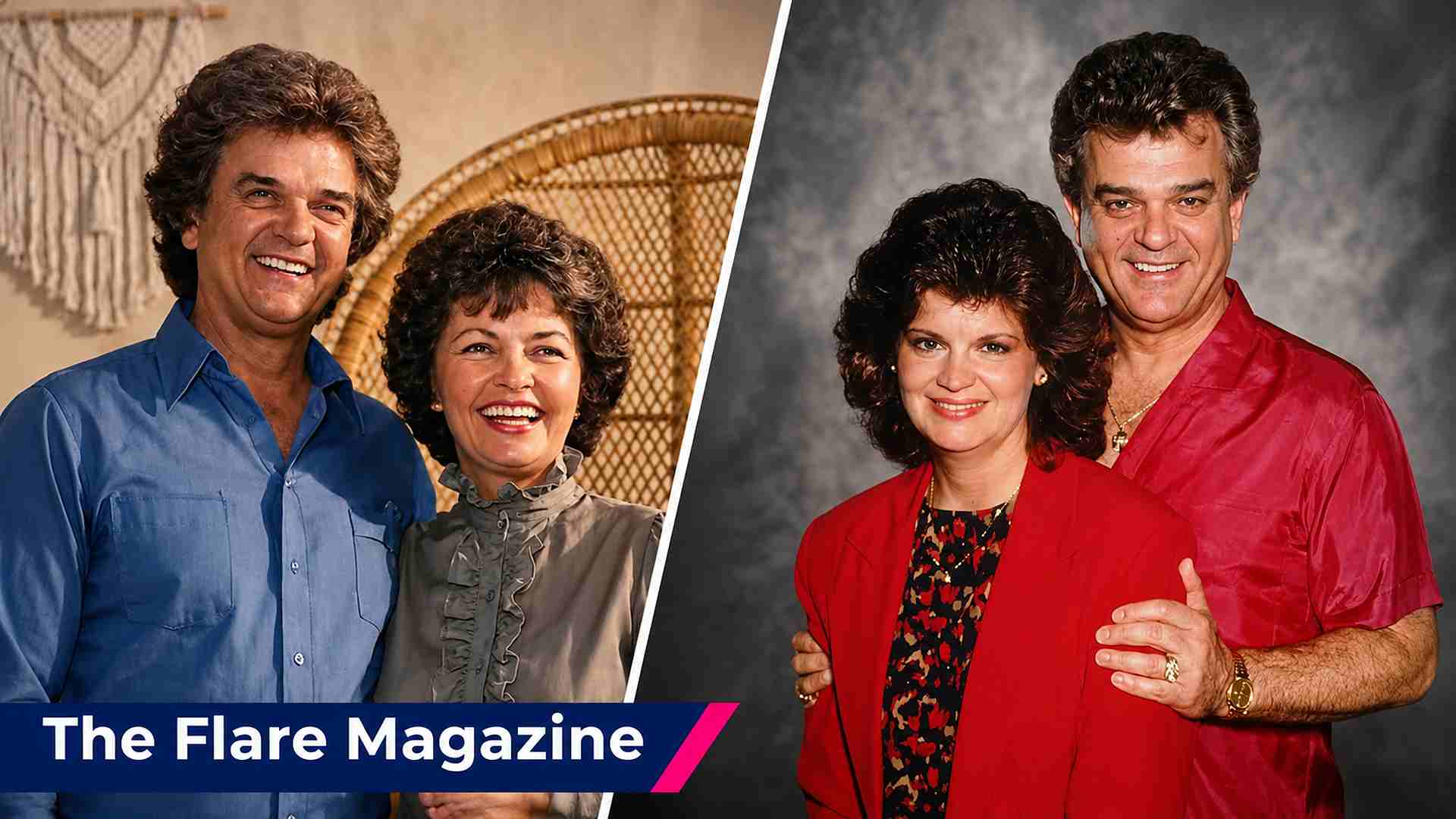
Dolores Virginia Henry, known as Dee Henry, was a Nashville music professional and Conway Twitty’s third and final wife. She worked in his business office, earned credits as a record producer, and married the country singer in 1987. Their marriage lasted until his death on June 5, 1993. Her career began long before their wedding.
In this article, you’ll learn about her work in Nashville, the songs and albums she helped produce, and her marriage to Twitty. You’ll also learn what happened in his last days, who his children were, and how his estate became the subject of a long court case.
Dolores Virginia Henry’s Start in Nashville
Dee Henry worked in Nashville’s music business during the 1970s. The March 26, 1977 issue of Record World reported that she had become secretary to Conway Twitty and Conway Twitty Enterprises. The trade magazine also said she had worked at Woodland Studios.
Twitty’s operation was far more than a touring act. It included records, music publishing, and other business ventures. The staff kept the office running while the singer spent much of his time on the road. Dolores Virginia Henry entered that busy world years before becoming Twitty’s wife.
The 1977 report also named Hugh Carden as business manager and Don Garis as accountant. Both later served as co-executors of Twitty’s estate. They were part of the same business circle in which Dee built her early career.
Her Career as a Record Producer
By February 1986, The Washington Post described Dee as Twitty’s longtime office manager and co-producer. That was more than a year before their wedding. Her part in his career had grown from office work to the music itself.
The AllMusic credits for Dee Henry list her as a producer on several Twitty albums. They include By Heart, Don’t Call Him a Cowboy, Still in Your Dreams, House on Old Lonesome Road, Crazy in Love, and Even Now. She also earned an associate producer credit on Final Touches.
The Hit “Desperado Love”
Dolores Virginia Henry shared a producer credit on Twitty’s 1986 single “Desperado Love” with Twitty and Ron Treat. The track reached No. 1 on Billboard’s country chart that September. It became his 40th No. 1 on that chart when his solo and duet hits were counted together.
The record was a hit before Henry and Twitty married. That matters because it places her work in a clear part of country music history. She was not simply given a title after becoming his wife. Her name was already tied to a major record.
Working on Twitty’s Final Album
Dee’s recording work continued through the last years of his life. On Final Touches, she shared production duties with Conway Twitty and Don Cook, with her role also listed in music credits as associate producer. The album came out in 1993, after Twitty died.
Dolores Virginia Henry also took part in the talks about releasing that album. MCA Records chairman Bruce Hinton said the decision was made with Dee after Twitty’s death. The company chose to release the music rather than leave his last studio work unheard.
Marriage to Conway Twitty
Dolores Virginia Henry married Conway Twitty in 1987. IMDb lists February 27 as the wedding date. Twitty was already a household name, with hits that included “It’s Only Make Believe,” “Hello Darlin’,” and “Linda on My Mind.”
Before Dee, he had married Ellen Matthews and Temple Maxine Jaco, often called Mickey. Dee was the third woman he married. Some accounts count four wedding ceremonies because Twitty and Mickey divorced and later remarried each other.
The couple had spent years working together. A Washington Post profile from February 1986 referred to Dee as both his professional partner and companion. Their wedding followed in 1987, and they stayed married for just over six years.
Conway’s four children were Michael, Joni, Kathy, and Jimmy. All were adults when he died, and they came from his earlier marriages. The estate records do not name any children born from his marriage to Dee.
Their Life During Twitty’s Later Career
Twitty lived in Hendersonville, Tennessee, near Nashville. He had opened Twitty City in 1982 as a place where fans could visit a site linked to his music and family. It also included his home and other family buildings.
The singer kept performing as the years passed. His career involved concerts, recording sessions, and a large business staff. Dolores Virginia Henry had a role in that work as office manager and producer, even as she shared his home life.
In a 1995 Billboard interview, Dee recalled that she and Twitty exercised together and that he had quit smoking. She also discussed how he felt about awards in country music. Her comments offered a glimpse of their time together that fans did not see from the stage.
The Illness That Ended Their Marriage
Twitty became ill after a show in Branson, Missouri, in June 1993. He collapsed on his tour bus and was taken to Cox Medical Center-South in Springfield. Doctors operated, but he died on June 5 from an abdominal aortic aneurysm. He was 59.
Dee was at the hospital with other relatives when he died, according to an Associated Press report published the next day. For her, his death ended a marriage and a working bond that had lasted more than a decade.
His last studio album had yet to reach stores. Final Touches was released later that year, carrying a final set of songs he had recorded and production work that included his wife.
The Estate Case After Conway Twitty Died
After the singer’s death, Dolores Virginia Henry became involved in a court case over his will and estate. It was not just a dispute about personal keepsakes. The assets included property and valuable music rights that could earn money after his death.
His Will and the Four Children
Twitty’s legal name was Harold Lloyd Jenkins. His will and two later changes provided $50,000 for his mother, Velma Dunaway, and left the rest to Michael, Joni, Kathy, and Jimmy. The documents entered probate on June 14, 1993.
Dee was his surviving wife, but those documents did not name her as a beneficiary. On December 10, 1993, she filed for an elective share under Tennessee law. That rule let a spouse claim a share of an estate even when the will left assets to other people.
The law then in force used one-third of the net estate as the basis for this share. But that did not mean taking one-third of each house, song, or bank account. The court first had to work out what belonged in the estate and how to value it.
What the Tennessee Courts Decided
The 1999 Tennessee Court of Appeals ruling addressed several key issues. It discussed life insurance paid directly to Twitty’s former wife, debts tied to property, and income earned while the estate remained open.
The court said certain insurance payments to his former wife did not form part of the estate for Dee’s share. It also reviewed the way debts and income affected the amount to be distributed. This helps explain why the case took longer than a simple reading of the will.
The case reached the appeals court again in 2002 and 2005. Those decisions concerned how income should be split, including income tied to music rights. The court rulings did not assign Dolores Virginia Henry a fixed personal net worth or show that she owned every part of Twitty’s catalog.
The case documents use the name Dolores Henry Jenkins. They also name the singer’s adult children and the people handling his estate. Together, they provide a clear timeline of the widow’s claim and the legal questions that followed.
Dee Henry’s Life After 1993
Dolores Virginia Henry remained involved in projects about Twitty after his death. In 1995, she spoke to Billboard about his life and served as a consultant for a television documentary called The Life and Times of Conway Twitty.
That work kept her linked to his music even after the marriage had ended with his death. The court cases also continued for years. But those public events tell little about her later home, family routines, or day-to-day life.
Frequently Asked Questions
Who was Conway Twitty’s final wife?
Dolores Virginia Henry, also called Dee Henry, was his final wife. They married in 1987 and were still married when he died in 1993.
Did Dolores Virginia Henry work in country music?
Yes. She worked in Twitty’s office and received music production credits. Her recorded work includes “Desperado Love” and albums such as Crazy in Love and Even Now.
Did Dee Henry and Conway Twitty have children together?
Twitty’s four children, Michael, Joni, Kathy, and Jimmy, were from earlier marriages. The estate documents name no child from his marriage to Dee.
Why did she go to court after his death?
Dee sought the share of Twitty’s estate allowed to a surviving spouse under Tennessee law. The courts then dealt with how to value property, debts, and income from music.
Is there a confirmed death date for Dee Henry?
No confirmed date of death is established in the accounts tied to Conway Twitty’s wife and the estate case. Her later personal life was not widely covered.
The Work Behind a Country Music Legacy
Dolores Virginia Henry is often introduced only as Conway Twitty’s wife. Her credits reveal more. She joined his business team in the 1970s, produced music during his chart success, and helped finish his final album.
Those parts of her life belong together. Her story connects the office, the recording studio, a six-year marriage, and the estate issues left after Twitty died. That is a fuller picture of Dee Henry’s place in country music.
You may also read: Gwen Yeargain Williams: Hank Jr., Hank III and Family Life.