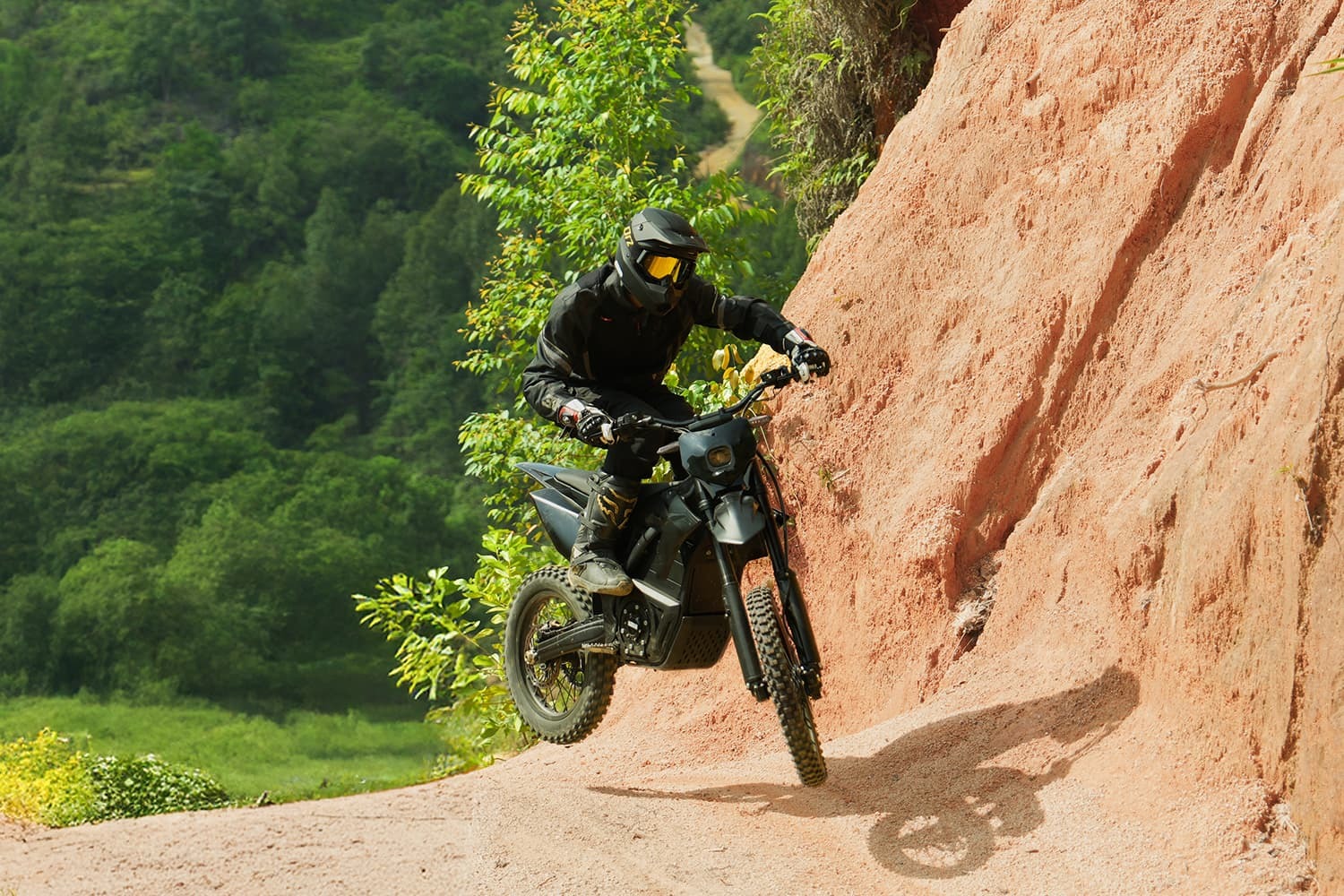
Electric bicycles have become a familiar option for commuting and everyday recreation. But advances in electric power technology have also brought another type of vehicle into the market: electric off-road motorcycles.
Although both use rechargeable batteries and electric motors, they are designed for different purposes. A conventional e-bike is generally built around everyday cycling, while an electric dirt bike focuses on motor performance, off-road handling and use on uneven terrain.
Understanding these differences can help buyers decide which type of vehicle actually suits their needs.
They Are Built for Different Types of Riding
Most conventional electric bicycles retain the basic structure of a bicycle, including pedals, a bicycle-style frame and a drivetrain designed for road or recreational cycling. Some use pedal-assist systems, while others also offer throttle control.
Electric off-road motorcycles have a different design. They typically feature a motorcycle-style frame, foot pegs, handlebars, off-road tires and suspension systems designed for rougher surfaces.
The distinction matters because a vehicle built for commuting is not necessarily suitable for demanding trails.
When comparing an electric dirt bike, buyers should look at its tires, brakes, suspension and overall construction rather than treating it as simply a more powerful electric bicycle.
What Do the Battery and Motor Specifications Tell You?
The battery and motor are the main components behind an electric motorcycle’s performance, but their specifications need to be understood together.
Battery voltage is measured in volts (V), while capacity is measured in amp-hours (Ah). Multiplying the two provides an estimate of nominal battery energy.
For example, a 60V 30Ah battery has a nominal energy capacity of 1,800Wh.
Peak motor power, measured in watts (W), indicates the motor’s maximum stated output. Torque, measured in Newton-meters (Nm), is relevant to acceleration and climbing performance.
However, one specification cannot explain the entire riding experience. Controller settings, battery discharge capability, tire traction and total vehicle weight also influence how a motorcycle performs.
Buyers should compare the complete power system instead of choosing a model based on its largest advertised number.
Why Tires and Suspension Matter Off-Road
Once a vehicle leaves smooth pavement, tire design and suspension become more important.
Conventional road tires are generally designed for paved surfaces, while off-road tires use different tread patterns to provide traction on dirt, gravel and other unpaved terrain.
Suspension helps the motorcycle respond to bumps, uneven ground and impacts. Front forks and rear suspension components contribute to handling, although actual performance depends on suspension travel, tuning and vehicle weight.
Braking is equally important. Riders need predictable control when slowing down on hills or approaching difficult sections of a trail.
That is why evaluating an off-road motorcycle involves more than looking at motor power. Tires, suspension and brakes all contribute to how the vehicle handles its intended environment.
Riding Modes Offer More Control Over Power Delivery
Some electric off-road motorcycles offer multiple riding modes that change how power is delivered.
A lower-power setting may prioritize more manageable speed and energy use, while a higher-power setting provides stronger acceleration and may consume more battery energy.
For teenagers with some off-road experience, qronge offers the X3 Spark, a youth electric dirt bike with a 60V 30Ah battery and a 4,500W peak mid-drive motor.
Different riding modes can produce different speed and range figures, so buyers should pay attention to the conditions behind the manufacturer’s specifications rather than assuming maximum speed and maximum range can be achieved at the same time.
Practical Considerations Before Buying
The intended use, charging arrangements and maintenance requirements all affect long-term ownership.
Electric off-road motorcycles require compatible chargers and battery care according to the manufacturer’s instructions. Tires, brakes, chains and suspension components also need regular inspection.
Riding access is another important consideration. Not every park, trail or public road permits electric off-road motorcycles. Buyers should check local regulations and riding-area rules instead of assuming that an electric motorcycle can be used anywhere a conventional bicycle can.
For trips to more distant riding areas, transportation, charging access and realistic range should also be considered.
Finding the Right Model During Black Friday
Black Friday provides an opportunity to compare different models and promotional offers. When reviewing black friday electric dirt bike deals, shoppers should consider battery capacity, motor specifications, tire dimensions and intended use alongside the advertised price.
During the Black Friday period, new website subscribers can unlock exclusive purchase offers worth a total of $1,780. Final savings and eligibility depend on the applicable promotion terms.
Electric bicycles and electric off-road motorcycles may share battery technology, but they serve different riding needs. Understanding their construction, power systems and intended use can help buyers choose a vehicle that genuinely fits the way they plan to ride.