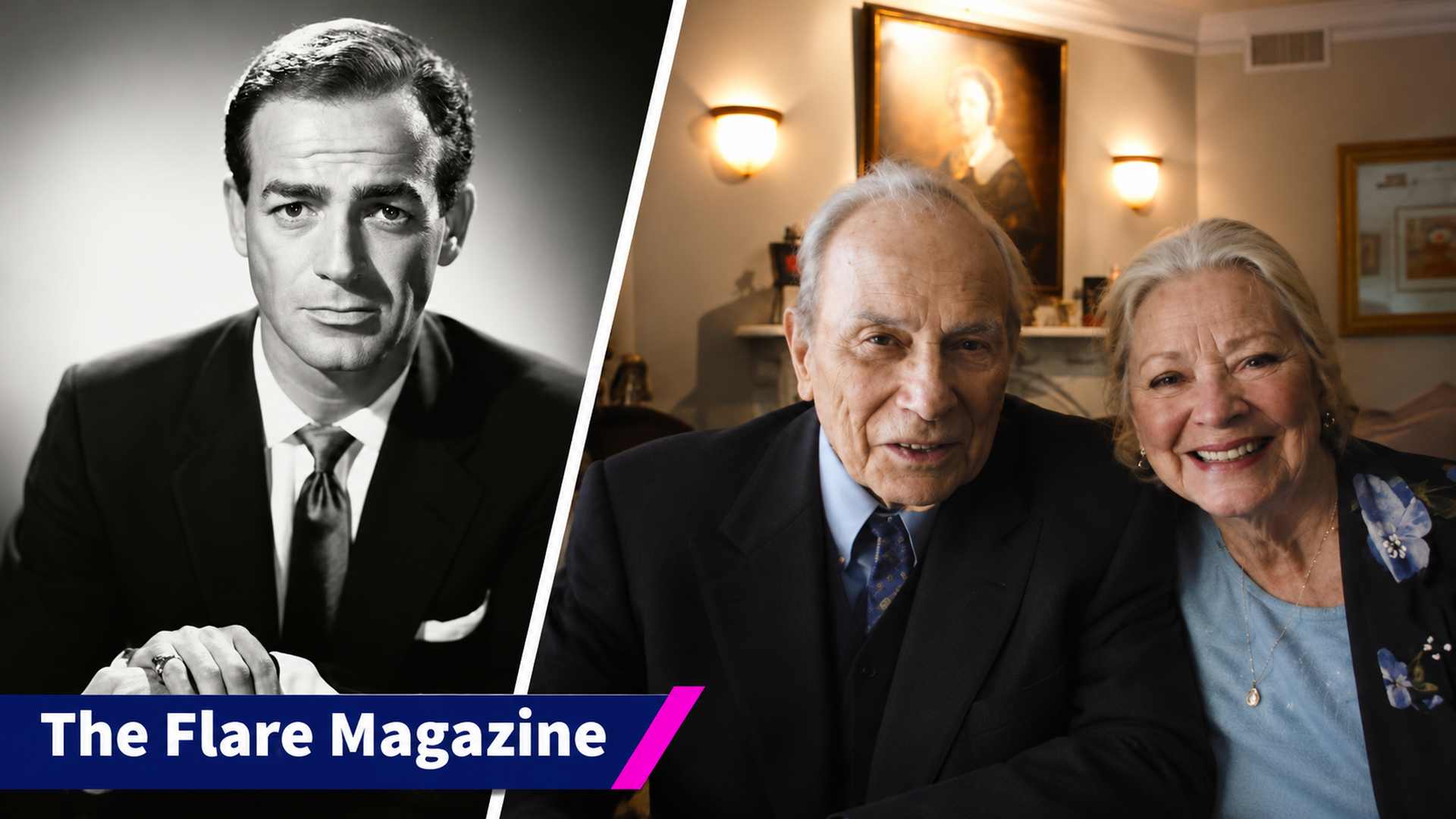
Porter Van Zandt was an American actor, stage manager, director and Broadway producer. He was also the husband of actress Debra Mooney, whom television fans know from Everwood. His life offers a look at the work that goes into bringing a play to the stage.
Long before Mooney became familiar to television audiences, he had built a career in New York theater. He worked on The Miracle Worker, directed plays abroad and went on to help run theater companies that gave actors and writers room to develop their craft.
Here, we will look at his years in the Navy, his path from acting to producing, the Broadway play he shared with his wife, and the family and theater work he left behind.
Quick Bio: Porter Van Zandt
- Birth: Around 1923, in Rochester, New York
- Education: University of North Carolina at Chapel Hill
- Military service: U.S. Navy during World War II
- Profession: Actor, stage manager, director and producer
- Wife: Debra Mooney
- Children: Stephen and Karen
- Stepdaughter: Kirstin
- Career honor: 1980 Tony Award nomination for Best Play
- Death: October 14, 2012, in Sherman Oaks, California
- Age at death: 89
From Rochester to the New York Stage
Porter Van Zandt was born in Rochester, New York, around 1923. He reached adulthood during World War II and served in the Navy during the conflict.
He also earned a degree from the University of North Carolina at Chapel Hill. By the late 1940s, he had entered the theater profession, where he would spend much of his working life.
In 1951, Porter Van Zandt appeared on Broadway in a revival of Shakespeare’s King Richard II. He took on three small parts in the play, including the Earl of Salisbury.
The next year, he appeared as Thompson in Dial M for Murder, a suspense play by Frederick Knott. This time, he also worked in stage management, giving him a place on both sides of the curtain.
The two jobs called for different skills. As an actor, he brought a character to life. As a stage manager, he helped keep the show on track.
Finding His Place Behind the Curtain
By 1954, Porter Van Zandt was the production stage manager for The Bad Seed, a play about a mother who begins to fear what her young daughter is capable of doing. After its Broadway run, he oversaw the national tour in 1955 and 1956.
Touring presented a different kind of challenge from working in one theater. A company had to move its people, costumes, scenery and equipment from city to city while keeping the show ready for each new audience.
His papers at the New York Public Library contain material from those years. Among them are travel plans, equipment drawings and letters about arrangements at the theaters on his tours.
The Bad Seed files also contain letters about booking separate hotels for Black members of the company. They offer a glimpse of the racial segregation that affected touring performers in mid-century America.
The late 1950s brought more Broadway work, including Two for the Seesaw. But a play that opened in 1959 would give him a chance to take his career much further.
The Miracle Worker and a Career Beyond Broadway
The Miracle Worker tells the story of Helen Keller and her teacher Annie Sullivan. William Gibson’s play follows the difficult steps through which Sullivan helps a young girl who cannot see or hear learn to communicate.
Anne Bancroft played Sullivan and Patty Duke played Keller when the show opened on Broadway on October 19, 1959. Arthur Penn directed it, while Porter Van Zandt served as production stage manager.
The show won the Tony Award for Best Play in 1960. For its stage manager, it also marked the start of a long working relationship with producer Fred Coe.
Taking the Play Overseas
Porter Van Zandt later directed a tour of The Miracle Worker. It went to Europe and Latin America in 1960 and 1961 with support from the U.S. State Department.
The tour was part of a U.S. effort to share its arts with other nations. His work now reached far beyond the New York stage.
In 1962, he directed two Australian productions of the same play. A program held by the University of Melbourne places one of them at Melbourne’s Comedy Theatre in May of that year.
He was now doing more than coordinating performances. As a director, he had a hand in how each new cast told Keller and Sullivan’s story.
New Plays, Musicals and Bigger Responsibilities
Back in the United States, Porter Van Zandt continued to work on Broadway shows throughout the 1960s. He was production stage manager for Gideon, A Thousand Clowns and Any Wednesday, three plays with quite different styles.
In 1963, he worked on Mother Courage and Her Children, Bertolt Brecht’s play about a woman trying to support her family in a time of war. The following years also brought directing work on regional productions of My Fair Lady and The King and I.
Porter Van Zandt returned to the work of Frederick Knott with Wait Until Dark in 1966. Unlike his earlier work on Dial M for Murder, he was credited as production supervisor rather than as an actor.
The year 1967 brought two more changes. He directed A Warm Body, which closed on its Broadway opening day, and became an associate producer on Daphne in Cottage D.
His career included short runs as well as popular shows. These projects placed him in roles that ranged from managing daily performances to helping bring a new production to the stage.
Helping Young Theater Companies Grow
During the 1970s, Porter Van Zandt took on leadership roles with the City Center Acting Company, which later became The Acting Company.
John Houseman and Margot Harley had founded the group in 1972 with members of the first drama class to graduate from Juilliard. Its touring model gave young actors the chance to build experience while bringing live theater to communities across the country.
As executive director, he worked alongside Houseman and Harley. In 1973, the company presented works including Measure for Measure and The Three Sisters on Broadway.
In 1975, its Broadway season included four different shows: The Robber Bridegroom, Edward II, The Time of Your Life and The Three Sisters.
Rather than keeping one play on stage for the entire season, a repertory company rotates several works. That approach allows audiences to see the same company take on very different stories and gives performers a wider range of roles.
The Robber Bridegroom returned to Broadway in 1976, with Van Zandt listed as an associate producer. He also helped produce and supervise the 1979 Broadway revival of Richard III.
Talley’s Folly and a Broadway Connection With His Wife
One of his best-known producing credits came in 1980 with Talley’s Folly. Written by Lanford Wilson, the two-person play takes place in a Missouri boathouse in 1944 and follows a man’s attempt to win the heart of Sally Talley.
Porter Van Zandt produced its Broadway run with Nancy Cooperstein and Marc Howard. It opened on February 20 at the Brooks Atkinson Theatre and ran for 286 performances.
The Tony Nomination and Pulitzer Prize
The production received a Tony nomination for Best Play in 1980. Wilson also won that year’s Pulitzer Prize for Drama for writing it.
The awards recognized different parts of the work: Wilson received the Pulitzer as the playwright, while Van Zandt and his fellow producers shared in the Tony nomination. Van Zandt was a Tony nominee, not the winner of that Best Play award.
There was a personal connection to the show as well. On June 24, 1980, Debra Mooney took over the role of Sally Talley and remained in the cast until the production closed on October 19.
The same Broadway play thus became part of both their careers, with him on the producing side and her on stage.
Marriage to Debra Mooney and Family Life
Porter Van Zandt was married to Debra Mooney, an actress whose work spans theater, film and television. They remained married until his death in 2012.
Mooney went on to appear in The Price and Getting and Spending on Broadway. Television viewers later came to know her as Edna in Everwood, a nurse with a direct manner and a military background.
The couple lived in Los Angeles by 2003, when Mooney was working on Everwood in Utah. Their family included his son Stephen, daughter Karen and stepdaughter Kirstin. He also had four grandchildren at the time of his death.
His brother Ted was among the relatives who survived him.
Opening Doors for New Plays at Circle Rep
At the Circle Repertory Company, Porter Van Zandt helped bring new plays to the stage. A producer may work on one show at a time. A producing director at a nonprofit theater helps keep a full season of plays going.
A first-person account by director Tom Evans recalls how Van Zandt helped bring Jim Leonard Jr.’s play The Diviners to the attention of Circle Rep’s artistic director, Marshall W. Mason.
After the play won a student writing award in 1980, agent Biff Liff encouraged Van Zandt to see it in Washington, D.C. He did, then urged Mason to consider the work for the company.
The play went into development at Circle Rep and became part of its season. A 1981 staging also lists him among its directors. Mooney played Goldie Short in a Circle Rep production of the play that year.
His role in The Diviners shows how he helped a young writer take the leap from college theater to the New York stage.
His Death and the Theater History He Left Behind
Porter Van Zandt died on October 14, 2012, in Sherman Oaks, California, at the age of 89. His obituary in The New York Times remembered his support for theater companies and the people he had guided during his career.
The Tony Awards included him in their 2013 memorial tribute, and the Stage Managers’ Association also remembers him on its memorial list.
The papers of Porter Van Zandt, covering his work from 1952 through 1967, are held in the Billy Rose Theatre Division of the New York Public Library. The collection includes scripts marked for performances, drawings of stage sets, lighting plans and programs from his tours.
The collection even includes notes on casting and cues that tell the crew when to change the lights or sound. It shows how a play comes together before the curtain goes up.
Final Thoughts
From his Navy service to his early acting roles and later years as a producer, Porter Van Zandt built a life around the theater. His career took him from small parts in Shakespeare to international tours and the production of a Pulitzer-winning play.
His marriage to Debra Mooney connects his story to a familiar face on American television. Yet his own legacy belongs to the plays he helped bring to audiences and the theater companies he helped build.
You may also read: Nancy Simon: Her Theater Career, Family and Writing