The first few hours of a security shift can pass quickly. There are entrances to check, corridors to patrol and questions to answer. By the time the building quiets down, the guard may still have half a shift ahead.
Security work asks a lot of the feet because it rarely involves just one kind of movement. A shift might alternate between standing at a reception desk, walking hard floors, climbing stairs and responding quickly when something needs attention.
Comfort begins with suitable footwear, but it also depends on fit, socks, breaks and the way the shift is organised. A good routine considers all of them before tired feet become the defining feature of the day.
Choose Footwear for the Whole Shift
Start with the worksite requirements
A security guard in an office lobby may face different conditions from one patrolling a warehouse or outdoor venue. Before comparing styles, the worker needs to know the employer’s footwear rules and the hazards identified for that site.
Protective toe caps, weather resistance or other safety features may be required for particular duties. Those features should be checked in the individual shoe or boot’s specifications, since a brand name or workwear appearance does not establish that a model meets a workplace requirement.
The ground underfoot matters as well. Polished indoor floors, concrete loading areas, wet entrances and outdoor paths each place different demands on a sole. A guard who moves between them needs footwear suited to the surfaces encountered most often.
Fit matters more than the size label
A boot can look sturdy and still cause trouble if it is too narrow, too loose or difficult to fasten securely. Toes need room, while the heel should stay in place during a normal walking stride.
The Victorian Government’s Better Health Channel guide to choosing shoes advises choosing footwear that fits well and suits the activity. For a security worker, that means trying shoes while standing and walking, preferably with the socks intended for a shift.
Both feet deserve a check. If one is slightly larger, the fit should accommodate it without leaving the other foot sliding around. A pressure point noticed during a brief fitting is unlikely to become welcome after twelve hours.
Laces or another secure fastening can help keep the foot positioned inside the shoe. They also allow a worker to adjust the fit when needed, provided the boot still feels stable and meets the site’s rules.
Balance protection and walking comfort
A long shift can make every step on a hard floor noticeable. Cushioning and a suitable sole may improve comfort, but the softest boot is not automatically the right one for a job that also calls for stability and protection.
The Canadian Centre for Occupational Health and Safety explains in its foot comfort and safety guidance that standing on hard surfaces and wearing poorly fitted footwear can contribute to foot discomfort. Its advice also connects footwear choices to the hazards of the specific workplace, a useful check when comparing work boots.
Ranges such as Magnum work and safety footwear online include different work boot designs, giving shoppers a place to compare construction and features. Each model still needs to be assessed against the wearer’s fit and the employer’s requirements before it can be considered suitable for a particular post.
New footwear should be tried before its first full shift where possible. A shorter walk or several ordinary outings can reveal rubbing at the ankle, movement at the heel or discomfort that was not apparent during a quick fitting.
Make the Hours Easier on Your Feet
Use breaks to change position
Standing still can be surprisingly tiring. At a fixed post, a guard may spend long periods with little opportunity to shift weight, even though patrols elsewhere on the site involve constant walking.
The US Occupational Safety and Health Administration’s guidance on standing work notes that remaining in one position can cause muscle fatigue and that hard work surfaces can contribute to foot pain. When duties allow, changing posture and taking scheduled breaks can help make a long shift more manageable.
A break does not have to be elaborate to offer a change. Sitting for part of an allotted rest period, moving away from a fixed standing position or varying tasks according to the site’s procedures can give the feet a different demand for a while.
Workplace arrangements matter here. A guard cannot always leave a post or choose when to sit, so concerns about prolonged standing are best raised through the supervisor and the site’s normal safety process.
Give socks and insoles attention
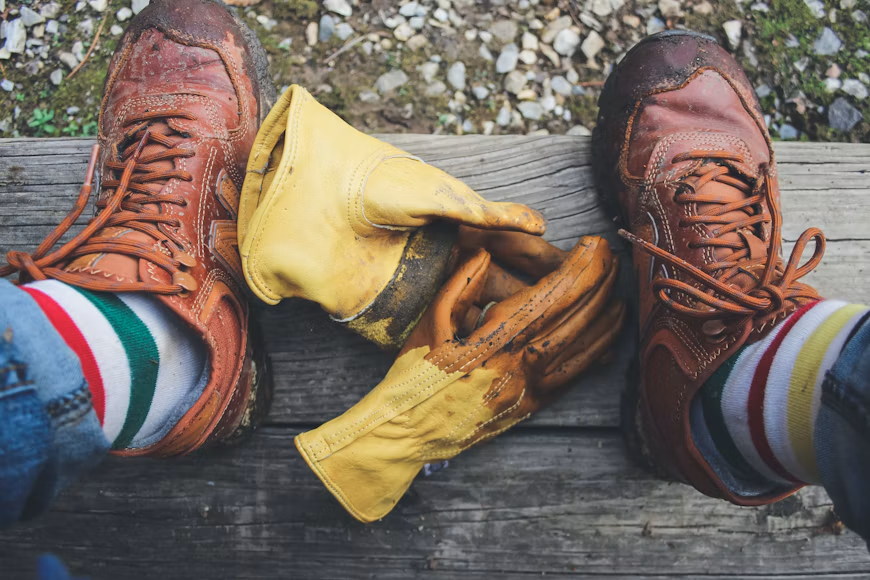
Socks are easy to overlook because they are hidden inside the boot. Yet a seam that rubs, a sock that bunches or one that leaves the foot feeling damp can become distracting over a long shift.
Trying work footwear with the intended socks helps reveal whether there is enough room. Keeping a spare pair available may also be useful on wet or particularly warm days, when changing into dry socks can make the remaining hours more pleasant.
An insole may help some wearers, especially if the original one has worn down. It should fit the boot without crowding the toes or lifting the heel out of position. Any addition should also be compatible with the footwear and workplace requirements.
The same principle applies to replacing worn boots. Flattened insoles, damaged linings and uneven sole wear can change how a familiar pair feels, even when the outside still looks serviceable.
Pay attention after the shift
A twelve hour shift does not end the moment a guard clocks out. Noticing where discomfort occurs can help identify whether a strap, seam, fit issue or particular part of the worksite deserves attention.
Cleaning and drying footwear according to its care instructions can help prepare it for the next shift. When possible, allowing boots time to dry fully between uses is especially helpful after rain or a warm day.
Pain that persists, worsens or changes how someone walks warrants advice from a qualified health professional. A new boot may address an obvious fit problem, but recurring symptoms need an individual assessment.
Security work can be unpredictable, and no pair of boots can make twelve hours on duty effortless. Footwear that fits the worker and the site, paired with suitable socks, maintained equipment and usable breaks, gives the feet a better chance of staying comfortable until the final patrol.