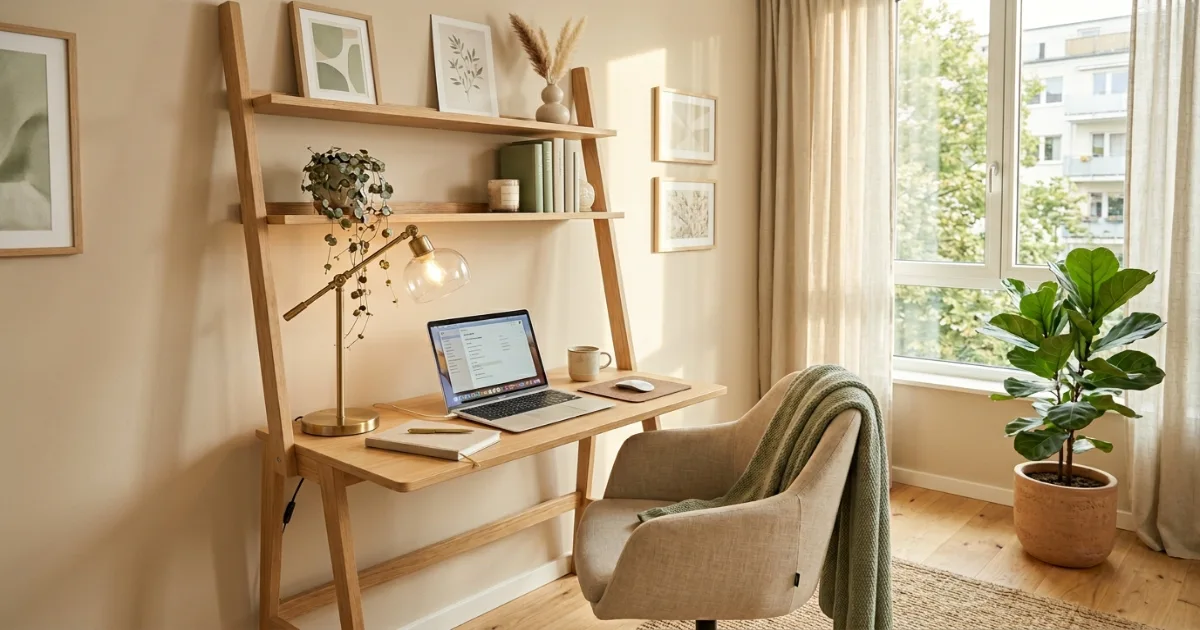
Renting comes with a long list of compromises, and working from a bedroom or a corner of the living room is often one of them. The good news is that a proper home office doesn’t need a spare room, a drill or a landlord’s permission. With a few clever choices, even the smallest rented flat can have a workspace that looks good and feels comfortable.
Here’s how to build one without losing the deposit.
Claim a corner
Start by deciding where work will happen. A bedroom alcove, the end of a hallway or a spot beside a window can all become a workspace. A bookcase, folding screen or tall plant helps mark out the area, and a rug underneath makes it feel like a separate zone rather than just another corner of the room.
The aim is a spot that feels different from where the evening is spent. That small boundary makes it much easier to start the working day, and to finish it.
Sort the seat first
If there’s one place worth spending, it’s the chair. A dining chair, stool or sofa arm might do for an hour, but a full day at a laptop calls for something better. Ergonomic office chairs are designed to support the body through long hours, with adjustable seat height, lumbar support and armrests that let the shoulders relax.
For renters, the bonus is portability. A good chair moves from flat to flat without any fuss, which makes it an investment that lasts well beyond the current tenancy. Look for a design that suits the space too, with a slimmer profile and neutral colours that blend into a small room.
The second seat
Flat-shares and small spaces often mean more than one person working at home. A housemate on the other side of the room, a partner with their own laptop or a window seat that doubles as a second workstation all see regular use. When choosing extra office chairs for these spots, the same rules apply: adjustability, decent support and a finish that fits the room.
It’s a detail that’s easy to miss. A beautifully styled main desk can be undone by a second seat that leaves its user aching by mid-afternoon.
A desk that doesn’t need drilling
Renters have plenty of options that avoid fixings. A slimline writing desk, a folding table, a console used as a workstation or a freestanding desk with built-in shelves can all make the most of limited space. Anyone who likes to alternate between sitting and standing might look at a desktop riser, which sits on top of an existing surface and can be put away when it’s not needed.
Whatever the choice, elbows should rest at around 90 degrees when typing, and the top of the screen should sit roughly at eye level.
Light it properly
Rented flats can be short on natural light, so position the desk beside a window where possible. A task lamp with adjustable brightness takes care of dark winter afternoons, and warm bulbs elsewhere keep the room feeling cosy rather than clinical.
Plug-in wall lights and clip-on lamps are renter-friendly alternatives to hardwired fittings, and they can come along to the next place.
Storage without damage
Floor-standing shelving, lidded boxes and desk organisers keep paperwork and equipment in order without a single hole in the wall. Where hanging is allowed, adhesive hooks and removable strips can handle lighter items, but it’s worth checking the tenancy agreement and the landlord’s rules first.
Cable clips and trays keep wires out of sight, which does more for a calm interior than most people expect.
Make it feel like yours
A workspace shouldn’t feel like a corner of the office. Removable wallpaper, a framed print leaning on a shelf, a favourite lamp and a plant or two can all add personality without risking the deposit. Soft, natural shades such as sage, warm grey and muted terracotta create a calm backdrop, and plants in particular soften hard edges and give the eyes somewhere to rest between screens.
Budget tips
Good pieces don’t need to be new. Second-hand desks and shelves are widely available, and a quick sand and wipe can transform them. Spend on the things that affect comfort most, namely the chair and the lighting, and save on the things that are purely decorative.
It also pays to buy in stages. Start with the seat and a sensible surface to work on, live with the setup for a few weeks and then add extras as the gaps become clear. That approach avoids impulse buys that turn out to be too big for the room, and it spreads the cost across a few pay cheques.
Looking ahead
A great home office isn’t about floor space or a big budget. It’s about creating somewhere that feels good to sit, works for the way the day unfolds and can move to the next address without a fuss. Start with a supportive seat, a desk at the right height and decent light, then layer in storage, colour and the personal touches that make the space feel like home.