
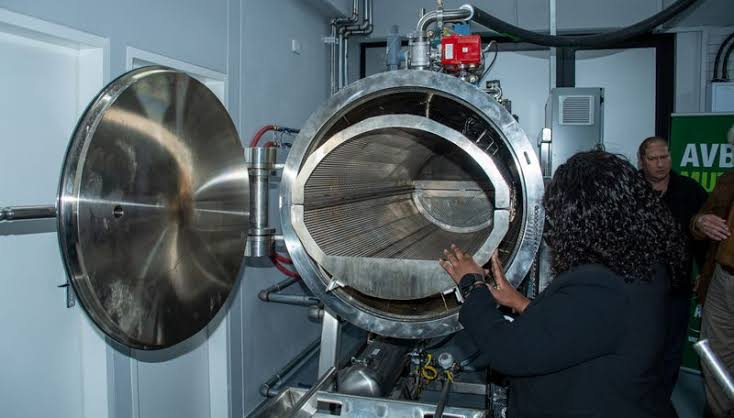
Water cremation is a way of caring for a body after death that uses water, an alkaline solution and heat instead of fire. It is also known as alkaline hydrolysis or aquamation.
The process leaves only bone, which is processed into a fine powder and returned to the family, much like ashes after a traditional cremation.
What Water Cremation Actually Is
At its core, water cremation speeds up a natural process. When a body is buried, moisture and naturally occurring substances slowly break down soft tissue over many years.
Alkaline hydrolysis carries out a similar breakdown in a controlled setting. Instead of decades, the change happens within a single process supervised by trained staff.
Where Families Can Find It
Water cremation is not offered everywhere. Availability depends on local regulations and on whether a provider has the specialised equipment.
Families in South East Queensland, for example, can ask Bethel and Logan Funerals in Brisbane about water cremation as an alternative to burial or flame cremation. Talking through the steps beforehand helps people decide whether it suits their loved one.
The Science Inside the Chamber
The body is placed in a stainless steel vessel. Water mixed with an alkali, commonly potassium hydroxide, fills the chamber and is heated and circulated.
The alkaline solution breaks the chemical bonds holding proteins, fats and other tissue together. These are reduced to simple building blocks such as amino acids, peptides, sugars and salts.
The skeleton does not dissolve. Bone is made largely of minerals, and these remain behind once the cycle ends.
A detailed look at the process is available from Smithsonian Magazine, which has explored its growing profile in the United States.
What Remains Afterwards
Once the cycle finishes, the bones are rinsed and dried. They are then reduced to a soft powder.
Families receive these remains in an urn, just as they would after a flame cremation. They can be kept at home, scattered or placed in a memorial garden, subject to local rules.
Metal from joint replacements or dental work is separated during the process. The liquid left behind is managed according to local environmental and water regulations.
Why Some People Choose It
Some families are drawn to water cremation because it avoids flame, which can feel gentler. Others are interested in its environmental profile, as it is often described as using less energy than flame cremation.
Personal values and faith play a part too. Some families talk it over with a minister, elder or spiritual adviser before deciding.
A farewell service can still be held in the usual way, with readings, music and time together, before or after the water cremation takes place.
The Bottom Line
Water cremation uses water, alkali and heat to return the body to its basic components, leaving bone that becomes a fine powder for the family to keep or scatter. It is a calm, controlled process grounded in well-understood chemistry.
If you are considering it, ask your funeral director how it works locally, what you will receive and how a service can be arranged around it.
